

Less is more: keys to research that communicates
We live in a context where attention is a scarce resource, clients and consumers no longer want to read. Every day we’re exposed to more content than we can process, and the time —or the will— to stop and read long documents, extensive analyses or never-ending presentations… simply doesn’t exist.
And this doesn’t just happen in how people consume content on social media or news outlets. We see it in our day-to-day work. Because both consumers and clients are asking for the same thing: synthesis.
A consumer in search of cognitive efficiency.
- Responds with concepts, not arguments: When asked to describe a product or brand, consumers reply with single words or tags: “it’s fresh,” “for everyday use,” “elegant.” They don’t elaborate. They synthesize.
- Skips over long texts on packaging or advertising: Consumers tend to scan packaging rather than read it. They prefer icons, clear claims or colors that “say something” quickly. The same goes for ads: they value what’s conveyed visually more than what’s written.
- Is driven by visual or emotional cues: At the point of sale, on social media or e-commerce, the first filter is not the content, but the look, format or “feeling” it gives. If it doesn’t catch the eye, the message won’t land.
- Builds brand relationships through experience, not description: They care more about how a product makes them feel than what is said about it. Decisions are made emotionally and intuitively, not through rational analysis.
- Rejects technical or “difficult” messaging: When a product or brand needs too much explanation, it loses relevance. “If I have to read to understand it, it’s not for me” — a phrase we’ve literally heard in focus groups.
- Prefers discovery through the senses or recommendations: Discovery happens by smelling, touching, looking… or hearing what influencers or trusted people say. Reading is the last resort.
A client looking for direction; to turn information into action.
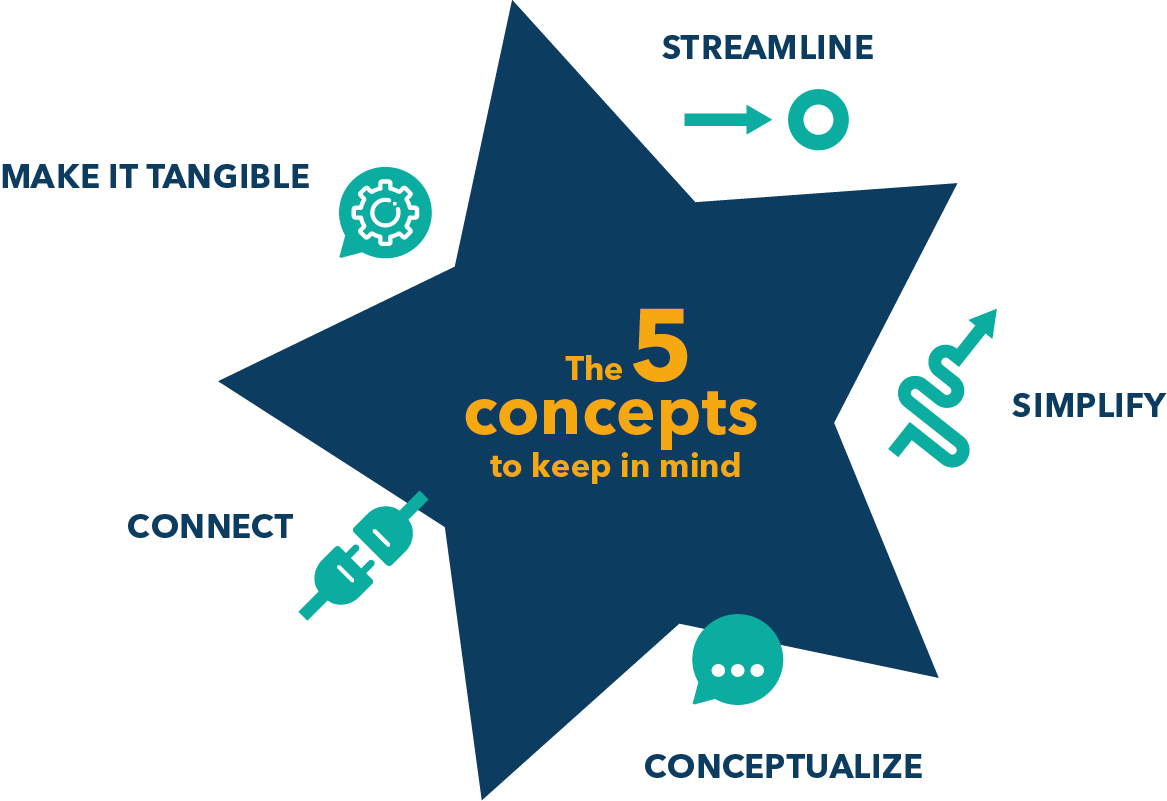
They don’t want “the whole report,” they want the what and the why. Words, concepts, models that quickly and visually summarize big ideas. That helps them make decisions, inspire their teams, or activate a brand.
- They have little time (and many topics on their plate): Marketing, innovation or leadership teams are juggling multiple projects. Reading a 100-slide report isn’t realistic. They need to get it fast, get to the point, and extract conclusions in 15 minutes, not 2 hours.
“I don’t have time to read it all. I want to know what changes because of this.”
- They need to share the findings internally: An insight that can’t be shared in a 5-minute meeting doesn’t scale. Clients need to convey what they’ve learned to other teams (product, retail, digital, creative agency…). To do so, concepts must be clear, key, and contagious.
“Give me something I can repeat to my boss or the agency.”
- They seek direction, not just description: A good report isn’t the one that says everything — it’s the one that helps drive decisions. Clients value when we prioritize, rank and point out the strategic implications of what we’ve found.
“Don’t tell me everything they said; tell me what I’m supposed to do with it.”
- They’re saturated with information: They have sales data, KPI dashboards, internal and external studies… The value no longer lies in adding more content, but in curating the information: shaping it, focusing it, pointing out what matters and why.
“I’m infoxicated. I need clarity and criteria, not more data.”
- They want research to become a tool: A useful report isn’t archived — it’s used. That’s why more and more clients ask us for formats that live beyond the PDF: named concepts, visual models, actionable summaries, compact storytelling.
“I need an output we can work with as a team — not just store away.”
What does this mean for brands and for those of us who research them?
This change in mindset doesn’t only affect how we communicate a product at the point of sale or in a campaign. It also redefines how we deliver value through research. And it raises a direct question:
Are our reports being read or are they being understood?
- It’s increasingly important to translate findings into actionable ideas.
- Levers that activate, not just describe.
- Concepts that circulate within organizations and support decision-making.
- It’s no longer enough to be right: we have to know how to tell it.
- Because both consumers and clients want to understand, not read. To connect, not dig deeper.
And that requires a fundamental shift in how we present our findings:
- Consumers don’t explain, they synthesize: they say “it’s elegant” or “it’s for older women,” and that encapsulates an entire brand narrative.
- Clients don’t ask “what did they say?” they ask “what do I do with this?”
- Teams don’t need more slides; they need a core idea to align marketing, retail, design or comms.
¿How can we evolve our reports to meet this demand?
Here are some examples:
- Stories told through strong headlines: every section needs a title that says something, not just describes the content. “Strategic insight” doesn’t work. “The brand is liked, but it doesn’t move people” does.
- Less text, more structure: short blocks, clear ideas, visual support. It’s not about dumbing down — it’s about making reading and understanding easier.
- Name what matters: key concepts should be memorable. If you identify a consumer profile that makes a difference, a trend changing habits, a phenomenon reshaping brand relations… give it a strong name. That helps it spread and stick.
- Turn the report into a tool, not a file: it should be shareable, quotable, defendable in a meeting. If no one opens your report after the debrief, it’s not working.
In short: synthesis is not a shortcut; it’s a strategy
More than ever, our role as researchers isn’t just to generate knowledge, it’s to translate it. Make it digestible, actionable, and inspiring. Synthesis doesn’t diminish; it amplifies. Because it turns a mass of information into an idea that can be remembered, defended and applied.
If we achieve that, we’ve done more than deliver a good report —
we’ve delivered direction.