



Madrid, July 2026 — Today, a new study on medication and driving was presented in Madrid, bringing together key stakeholders from the road safety and healthcare ecosystem.
The research has been led by Fundación Mapfre, in collaboration with Fundación Bidafarma, DGT (Ministry of Interior), and the General Pharmaceutical Council, and developed by Salvetti Llombart as the consulting partner responsible for the study.
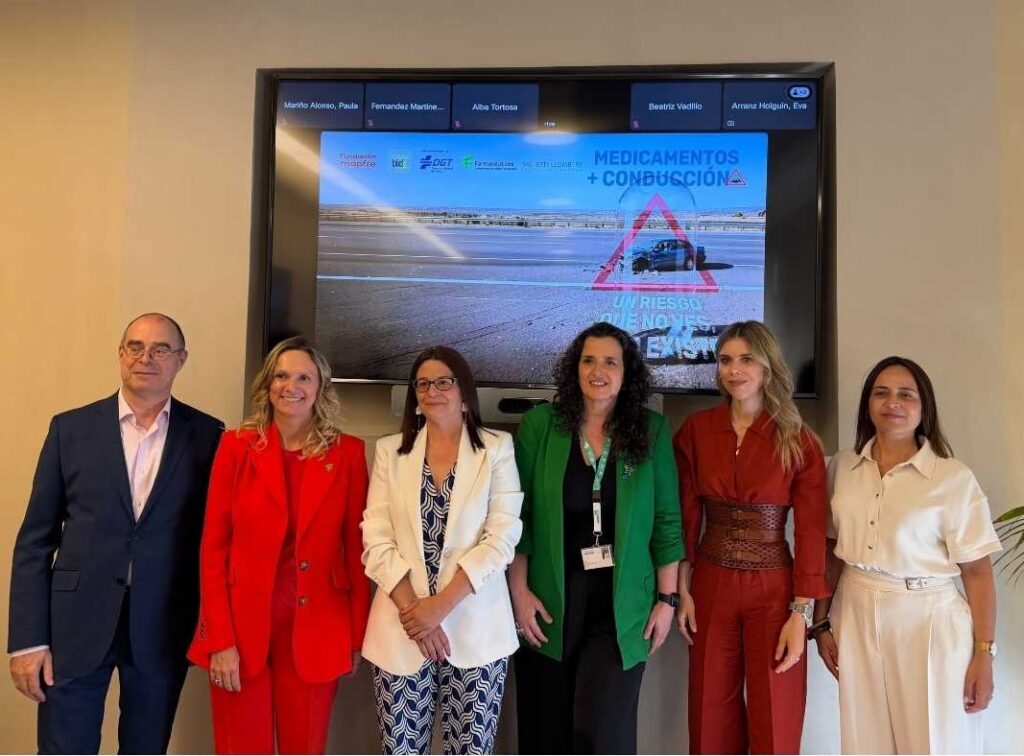
Representing Salvetti at the event, Ida Castellsaguer (Director of Business & Sales) attended the presentation, reinforcing the firm’s active involvement in addressing complex behavioral challenges through insight-led approaches.
Salvetti’s role in the study
Salvetti Llombart has led the design and execution of the study, combining qualitative and quantitative methodologies to explore both declared attitudes and real behaviors around medication use and driving.
The research included:
- A qualitative phase with drivers, healthcare professionals, and road safety experts
- A quantitative phase based on 2,000 online interviews with Spanish drivers aged 18–75
This approach allows for a deeper understanding not only of awareness levels, but also of the underlying behavioral dynamics shaping decision-making.
Three key ideas from the study
While a more detailed analysis will follow soon, today’s presentation highlighted three essential insights:
- Medication is not yet part of the driving routine
Medication remains largely absent from drivers’ preventive checks before getting behind the wheel, despite its potential to affect attention, reflexes, and reaction time.
- Awareness does not always translate into action
Although a large proportion of drivers recognize that medication can impair driving, this awareness does not consistently lead to safer behavior, revealing a clear gap between knowledge and action.
- A “false sense of control” influences behavior
Many drivers believe their medication has little or no impact on their driving ability, or that they can compensate by adjusting how they drive—an effect that increases exposure to risk.
Looking ahead
The study points to the need to position medication-related impairment as a priority issue in road safety, requiring coordinated efforts across healthcare professionals, institutions, and communication channels.
At Minerva Insights, we see this as a clear example of how behavioral understanding can help bridge the gap between awareness and real-world action.
Click here to check the document and the infographic.