
For years, in market research, we have repeated an almost automatic idea: July is not always the best time to conduct fieldwork. Holidays begin, routines are disrupted, availability decreases, schedules change, and consumption patterns shift.
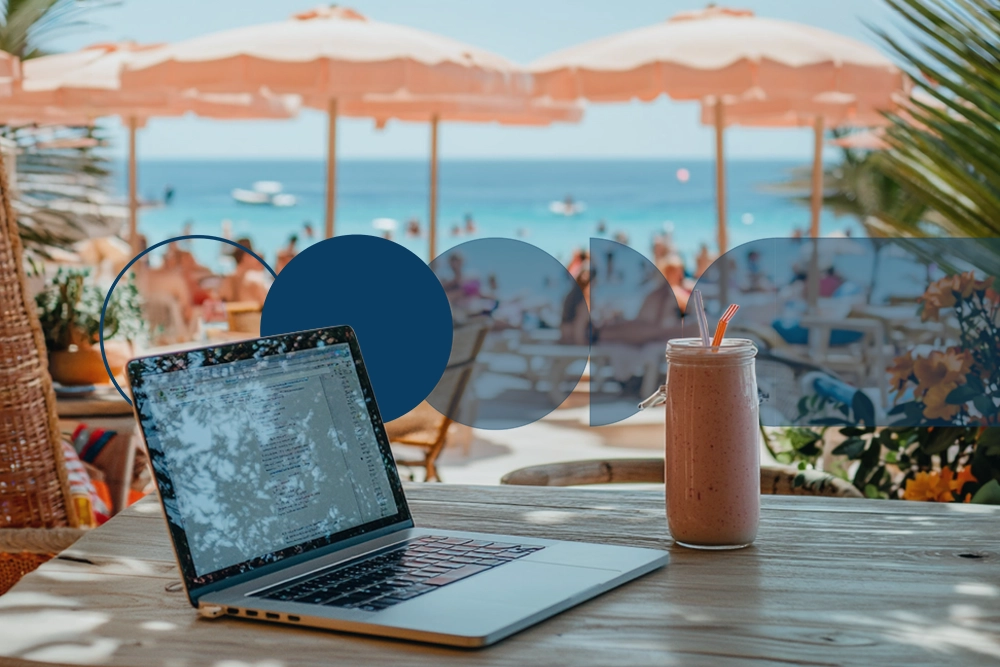
But perhaps the issue is not researching during the summer, but interpreting summer as if it were an anomaly. Consumers do not stop consuming when the heat, holidays, or travel arrive. What they do is mix contexts: they work and rest, save and indulge, plan and go with the flow, consume at home and away from home, make decisions alone and also in groups. Summer is not a parenthesis in consumption; it is another way of consuming.
And this is especially relevant if we consider that holiday periods are not isolated moments. Between summer, Christmas, Easter, and other moments when routines are disrupted, we are talking about a very significant part of the year. That is why systematically avoiding these periods in research can lead us to miss a key dimension of real consumer behavior.
Summer as a mix of habits, contexts, and decisions
In summer, schedules, spaces, companions, meals, journeys, the relationship with spending, and tolerance for dissatisfaction all change. Buying a snack at home is not the same as buying one at the beach. Choosing a drink during a work break is not the same as choosing one on a terrace. Using a banking app to check everyday expenses is not the same as using it to organize a holiday.
That is why talking about “summer mode” does not simply mean talking about seasonality. It means understanding a mix of habits, needs, and decisions that are activated when everyday life is reorganized.
For sectors such as tourism, hospitality, leisure, travel, beverages, food, FMCG, mobility, or entertainment, this moment is not peripheral: it can be central to the business. But even for categories less directly associated with summer, observing these changes can reveal highly valuable tensions: how budgets are managed, which formats become more convenient, which brands best accompany travel, or which solutions reduce friction in less predictable contexts.
The 5 dimensions of “summer mode”
- Places and consumption contexts
Summer moves many decisions into new settings: terraces, beaches, trips, second homes, out-of-home leisure, or on-the-go consumption. The question is not only what is consumed, but where, when, and in what situation the brand appears.
- Frequency, spending, and elasticity
Some categories gain consumption occasions, but spending also becomes more conscious. Consumers want to enjoy themselves, but they need to feel that they remain in control. That is why it is essential to understand where frequency increases, where the average spend rises or falls, and which categories are best able to justify the expense.
- Motivations and emotional state
In summer, different needs are activated: disconnection, reward, indulgence, practicality, spontaneity, or the search for experiences. But tensions also emerge, such as heat, tiredness, saturation, financial pressure, or logistical stress. Understanding this balance helps identify which messages, products, or propositions connect best.
- Company, coexistence, and decision-making
The summer consumer makes fewer decisions alone. Many choices are made with a partner, children, friends, family, or groups. This changes who influences, who buys, who uses, and who validates the decision. For many categories, understanding the consumption unit is just as important as understanding the buyer.
- Frictions and expectations towards the brand
When schedules, movements, and contexts change, tolerance for friction also changes. Availability, speed, ease of use, format, portability, and clarity become decisive. In summer mode, a relevant brand is not only one that people like, but one that makes life easier.
Bias or insight?
From a methodological point of view, it is understandable that July raises doubts. If we are measuring average habits, it is worth asking whether the timing of the fieldwork may affect the results. But we should also ask ourselves: what is summer revealing that remains hidden during the rest of the year?
The key lies in designing research with intention. Measuring structural behavior is not the same as exploring holiday habits, on-the-go consumption, new usage occasions, or shared decision-making. In the first case, the seasonal effect needs to be controlled. In the second, it should be actively leveraged.
To do this, methodologies such as consumption diaries, mobile ethnography, in-depth interviews, customer journey studies, or short in-the-moment questionnaires can help capture behavior in context.
In short, July is not a pause; it is change
For brands, understanding the summer consumer does not mean assuming that all seasonal behavior will be permanent. It means recognizing that people are more complex than their usual routines. Their decisions depend on the moment, the environment, the emotion, the group, and the friction.
For market research, the challenge is not to avoid these periods, but to read them correctly. Because summer, holidays, and other exceptional moments are not noise: they are consumption contexts with their own logic.
And many strategic opportunities appear precisely there, when life moves off script.
Interested in more perspectives on consumer behaviour, market research, and data-driven decision-making? Follow Minerva Insights on LinkedIn to stay up to date with our latest articles, insights, and industry trends.